Countertops are one of the first things people notice when they walk into a kitchen. They also happen to be one of the decisions homeowners agonize over the most during a remodel. And in the Houston market, the conversation almost always comes down to the same two materials: granite and engineered quartz.
Both are excellent surfaces. Both hold up well. Both look beautiful when they’re installed correctly. But they’re very different materials with different strengths, and the right choice depends on how you actually use your kitchen, not just what looks best on a Pinterest board.
Here’s an honest comparison based on what we see for kitchen remodeling across Cypress, Tomball, Katy, and the greater Houston area.
How Granite and Quartz Actually Compare
Before getting into the details, it helps to understand what each material actually is, because the names can be misleading.
What Granite Is
Granite is a natural stone. It’s quarried from the earth in large blocks, cut into slabs, polished, and installed. Every slab is unique because the patterns, veining, and mineral deposits formed naturally over millions of years. That uniqueness is a major part of the appeal.
Because it’s a natural stone, granite has natural characteristics. It’s porous, which means it can absorb liquids if the surface isn’t sealed. It can chip at the edges if something heavy hits it at the wrong angle. And the color and pattern you see in the showroom slab is what you get. There’s no way to replicate an exact piece if you need more material later.
What Engineered Quartz Is
Engineered quartz is a manufactured surface. It’s made from roughly 90 to 94 percent ground natural quartz crystals mixed with polymer resins and pigments, then pressed into slabs under high heat and pressure. Brands like Caesarstone, Silestone, and Cambria are all engineered quartz products.
Because it’s manufactured, the color and pattern are consistent from slab to slab. You can order more of the same product later and it will match. The resin binder also makes the surface nonporous, so it doesn’t need sealing. However, that same resin is what makes quartz sensitive to high heat, which is worth understanding before you choose it for a kitchen where hot pans regularly land on the counter.
Durability in a Houston Kitchen
Both materials are hard, scratch-resistant surfaces that hold up well under normal kitchen use. The differences show up at the edges.
Granite is harder than quartz on the Mohs scale, which means it resists scratching slightly better. But granite is more brittle. A heavy cast iron pan dropped on the edge of a granite countertop can chip the stone. Those chips can be repaired, but the fix is never invisible.
Quartz has a slight advantage in impact resistance because the resin binder gives it a little more flex. It’s less likely to chip from a dropped pan. But quartz is more vulnerable to heat damage. Setting a hot pan directly on a quartz surface can cause a permanent discoloration mark or a slight surface crack around the point of contact. Granite handles direct heat much better because it’s solid stone with no resin to scorch.
In Houston’s climate, neither material is affected by humidity. Both are stable in our heat and moisture. Neither will warp, expand, or degrade from the environment.
Maintenance and Sealing
This is where the two materials diverge the most.
Granite needs to be sealed when it’s installed, and resealed roughly once a year (sometimes every two years, depending on the stone and how heavily the kitchen is used). The sealing process is simple. You apply a granite sealer, let it soak in, wipe it off, and you’re done in about 20 minutes. But you do have to actually do it. If the sealant wears down and you spill red wine, coffee, or cooking oil on unsealed granite, the stone can absorb the stain.
Quartz never needs sealing. The nonporous surface resists stains on its own. Spill wine, leave coffee sitting, drop beet juice on it, and it wipes clean without soaking in. For busy families or homeowners who don’t want to think about annual maintenance, this is often the deciding factor.
Daily cleaning for both surfaces is the same. Warm water, mild soap, a soft cloth. Neither material requires specialty cleaners.
Appearance and Design Flexibility
This one is personal preference, but there are real differences worth understanding.
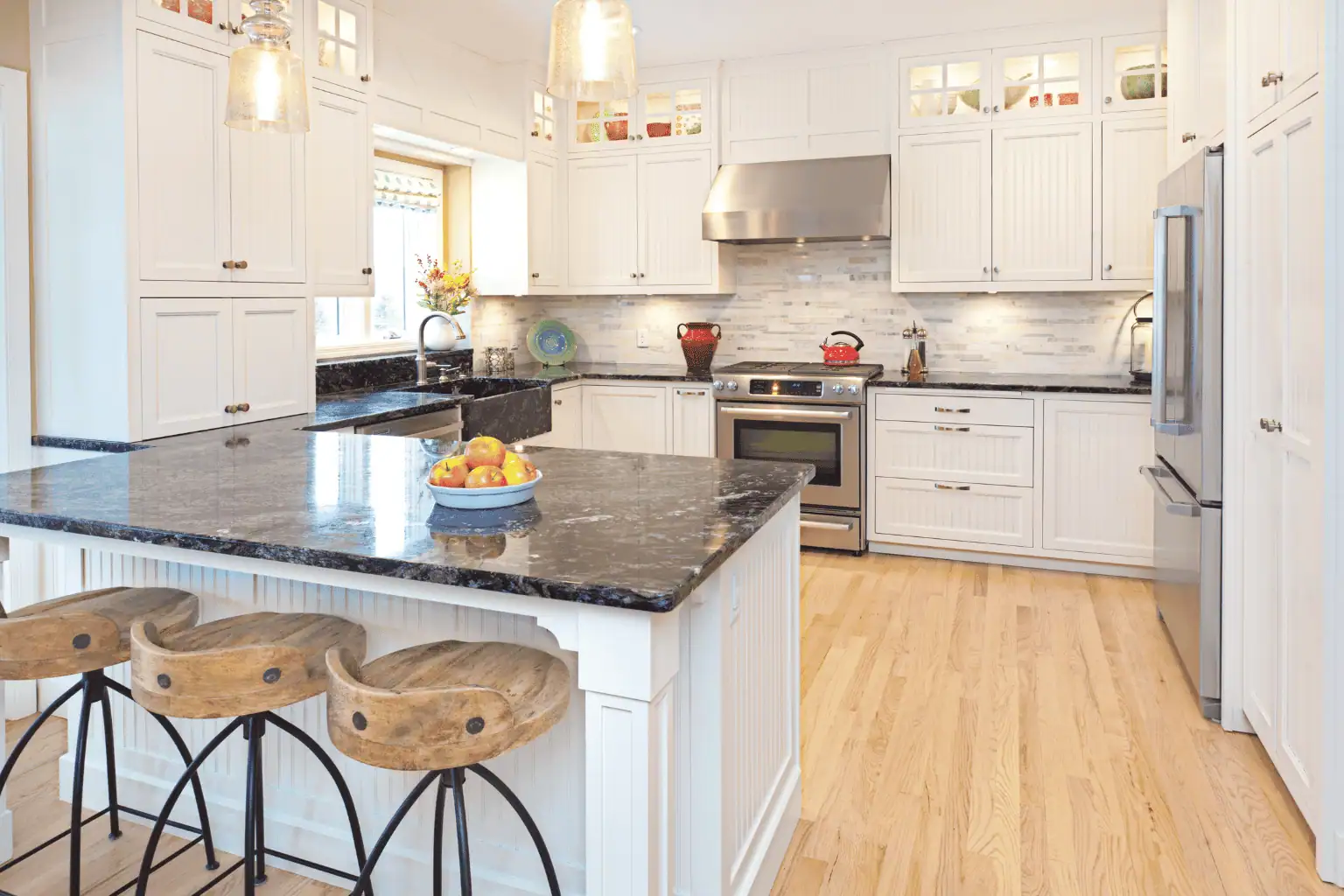
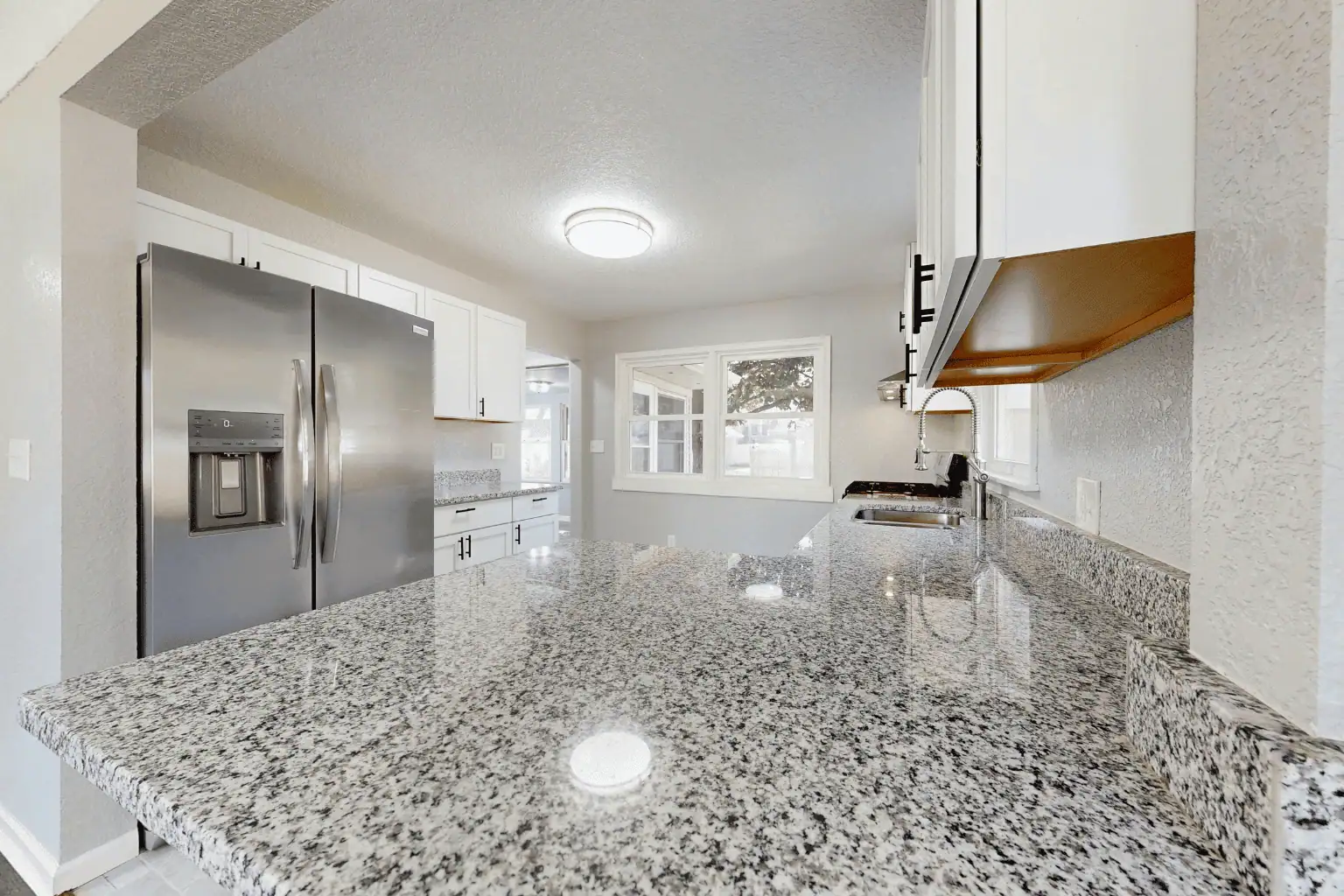
Granite gives you one-of-a-kind slabs. No two pieces of granite look exactly the same. The veining, mineral flecks, depth of color, and natural variation make every countertop unique. For homeowners who want that organic, natural-stone character in their kitchen, granite delivers something that manufactured surfaces simply can’t replicate. The trade-off is that you need to visit the stone yard and pick your exact slab. What you see online or in a small sample won’t fully represent the actual piece going into your kitchen.
Quartz gives you control. Because it’s manufactured, you can get extremely consistent colors, patterns, and finishes. If you want a solid white countertop with no variation, quartz can do that. If you want a marble-look surface without the maintenance headaches of real marble, quartz can do that too. The design range has expanded significantly in recent years, and some of the newer quartz patterns are remarkably convincing as natural stone lookalikes.
Both materials work well with the kitchen design trends in Houston that are popular right now, including waterfall islands, thick mitered edges, and tone-on-tone kitchens. And both pair naturally with the kind of custom cabinetry installation finishes (painted shaker, natural wood, slab-front) that are showing up in a lot of Houston kitchen remodels.
Cost Comparison in the Houston Market
Pricing for both materials falls in a similar range, which sometimes surprises homeowners who assume one is significantly cheaper than the other.
Granite typically runs $40 to $100 per square foot installed in the Houston area. The price depends on the stone variety, the slab thickness, edge profile, and the complexity of the layout (cutouts for sinks, cooktops, and unusual shapes add cost).
Quartz typically runs $50 to $120 per square foot installed. Entry-level quartz colors can be comparable to mid-range granite. Premium quartz patterns (especially the convincing marble-look options from brands like Cambria or Caesarstone) run at the higher end.
For a typical Houston kitchen with 30 to 50 square feet of countertop surface, you’re looking at roughly $1,500 to $5,000 for either material, including fabrication and installation. The exact number depends on the specific product, the edge detail, and how many cutouts are needed.
If you want to understand how countertop costs fit into the bigger picture, our breakdown of kitchen remodeling cost in Houston covers all the major budget categories.
Which One Should You Choose?
There’s no universally better option. The right countertop depends on your priorities.
Granite may be the better choice if you want a one-of-a-kind natural stone surface with unique character, you regularly set hot pans directly on the counter, you don’t mind annual sealing, and you value the depth and warmth of natural stone.
Quartz may be the better choice if you want a low-maintenance surface that never needs sealing, consistency in color and pattern matters to you, you have young kids and want maximum stain resistance, or you prefer the look of a solid, uniform countertop.
Both materials work beautifully in Houston kitchens. Both last for decades when they’re installed correctly. And both hold their value well at resale, which is worth keeping in mind if you’re remodeling with future buyers in mind.
The countertop choice is one piece of a larger puzzle. It interacts with your cabinetry, your backsplash, your flooring, and your layout. That’s why we usually recommend picking your countertop at the same time as your cabinets rather than in isolation. If you’re planning a full kitchen renovation, our guide to factors that affect kitchen remodel price is a good starting point for understanding how all these decisions connect.
Frequently Asked Questions
Is quartz or granite better for Houston’s climate? Both perform well in Houston’s heat and humidity. Neither warps or degrades from the climate. The bigger consideration is how you use your kitchen (hot pans, staining risk, maintenance tolerance) rather than the weather outside.
Does granite crack easily? Not under normal use. Granite is extremely hard. Cracks typically happen from structural issues underneath the countertop (unsupported overhangs, flexing plywood substrate) or from a significant impact at a vulnerable edge. Proper installation with adequate support eliminates most cracking risk.
Can you put hot pans on quartz? It’s not recommended. Brief contact with a warm pan is usually fine, but sustained contact with a very hot pan (straight from the oven or stovetop) can leave a permanent discoloration or surface mark. Use a trivet. With granite, direct heat is not an issue.
How often does granite need to be sealed? Most granite should be resealed once a year. Some denser varieties can go 18 to 24 months between sealings. The process takes about 20 minutes, and the products are available at any home improvement store. It’s simple but you do need to stay on top of it.
Which countertop has better resale value? Both add comparable value. Quartz has been trending slightly higher in buyer preference surveys over the last few years because of the low-maintenance appeal, but a beautiful granite slab still turns heads. Either choice positions your kitchen well for resale, especially as part of a full kitchen remodeling services project where the countertop, cabinets, and layout all come together.